For anyone who has been at Ransom Everglades for more than a year, one thing is obvious this year: the times are changing. Literally.
After consulting with several benchmark schools across the country and collaborating internally, the leadership of the RE Upper School rolled out a new schedule this year that includes a later start time, longer passing periods, a new slot for AAA and Advisory, and even a half-day once a month. The goal, according to Head of the Upper School Dr. Donald Cramp, was to address a lack of consistency in previous schedules that led to confusion for some. “We wanted one consistent start time, one consistent end time, and clearer transitions between classes and lunch. To address that, we brainstormed ways to create consistency while adding flexibility,” he said.
So, is it working? Let’s start where the day starts:
This year, school starts at 8:30 a.m. instead of 8:15 a.m. Though 15 minutes might not sound like a lot, the change was made in an effort to give students more sleep. Research shows later starting times are linked to better-rested students. A recent study conducted by the National Sleep Foundation found that 87% of high school students in the United States are getting less than the recommended 8.5-9.5 hours of sleep on school nights. According to an article by the American Psychological Association, later school starts correlate with improved mood, better attendance and grades, and fewer car crashes among youth. The research has made clear that if students are more rested, they learn better.
Freshman Enzo Porcelli ’29 agreed. “I feel like the times are pretty good for me. It’s not a very early start. I love that I don’t have to wake up at 6 a.m. and crash on my way to school,” he said.
Students generally agreed that the later start time is a win. But not every change has been so well received.
This year, the AAA block has been moved to a new 25-minute slot after the second period of the day, just before lunch. The goal, according to school leadership, was to allow students to have a longer lunch if assembly gets out early. In practice, however, students have struggled with congestion when an assembly ends and the entire school rushes into the cafeteria at once. Lines back up, students get hungry, and frustration spreads.
Senior Owen Acosta ’26 expressed his concerns with the new format. “When you’re released from class to lunch, students are usually dismissed at more staggered times,” he said. “Now, when we get out of the assembly, everyone ends up in the cafeteria at once. It’s impossible to get food quickly, and you’re just left waiting in line, hungry, for a long time.”
Juniors are feeling it too. “Most of the time we’re just stuck behind the seniors and faculty. As juniors, we have to wait too long to get our food,” Auguste Houlle ’27 said.
The school has tried to fix this issue by letting different grades out at slightly different times, but it hasn’t solved the problem. “This system helps manage flow, though we’re still adjusting,” Dr. Cramp said. “We’ve also introduced a food truck and expanding the pizza pavilion to reduce crowding and shorten wait times.”
In addition to the 11:40 AAA, RE also moved morning Advisory to a new slot between the first and second period of the day, now starting at 9:55 a.m. instead of first thing in the morning. According to a report by U.S. News and World Report, many schools retain nonacademic time because it is rooted in the belief that students do better when they feel connected to their teachers—or in this case, an advisor. Moving advisory between periods 1 and 2 is an attempt to help students make a meaningful connection with their advisor, rather than just serve as a buffer at the start of the day.
For some students, though, losing the buffer has come at a cost. “Having advisory in the morning gave me a little cushion when I came late to school. This year, if you’re late, you go straight into your first class late and miss valuable learning time,” he said.
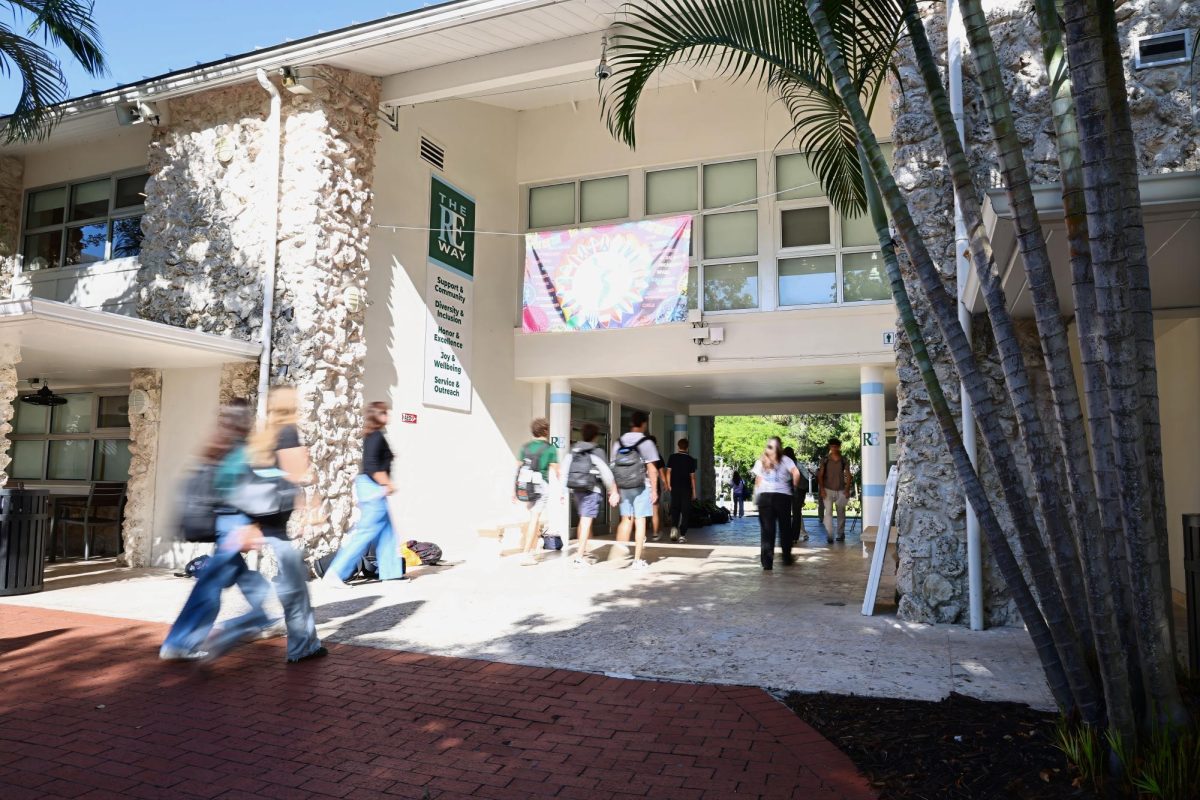
One change that has been popular is the new 10-minute passing period. Last year there were only five minutes, and on a campus as big as the RE Upper School, students struggled to make their way to class. The goal now is to ensure that students have time to grab a snack, slow down, and take a breath between classes.
Houlle said he really likes it: “I like the 10-minute transition times. I find it nice not having to stress about getting between classes. It also gives me time to talk with friends on the way.”
The monthly half-days are another new concept. While other schools have incorporated half-days, RE never had them until now. Once a month, dismissal occurs at 12:20 p.m., allowing students to enjoy an early release and giving teachers dedicated afternoon meeting time to improve classroom practices. On half-days, every class is shortened to 50 minutes, which means students move through the entire schedule back-to-back.
As an article in Education Week points out, timing has always been an issue at schools. Teachers want more time, students want less, and administrators try to land somewhere in the middle. For over 5 years, RE has experimented with new schedules in an effort to find the balance. “We’re always open to feedback,” Dr. Cramp said. “If students have ideas, especially about lunch flow, AAA, or assemblies, please share them with Student Government, who will bring them to us.”
So far, the consensus seems to be: The later start time and longer passing periods? Big improvements. Advisory in the middle of the day and AAA before lunch? Somewhat unpopular so far. The half-days? Still up for debate.
For Porcelli, it’s important to keep the new schedule in perspective. “I think it balances out fine,” he said. “There are some small issues, but overall, it’s not that big of a deal.”
Will this year’s changes be a keeper? Only time will tell.