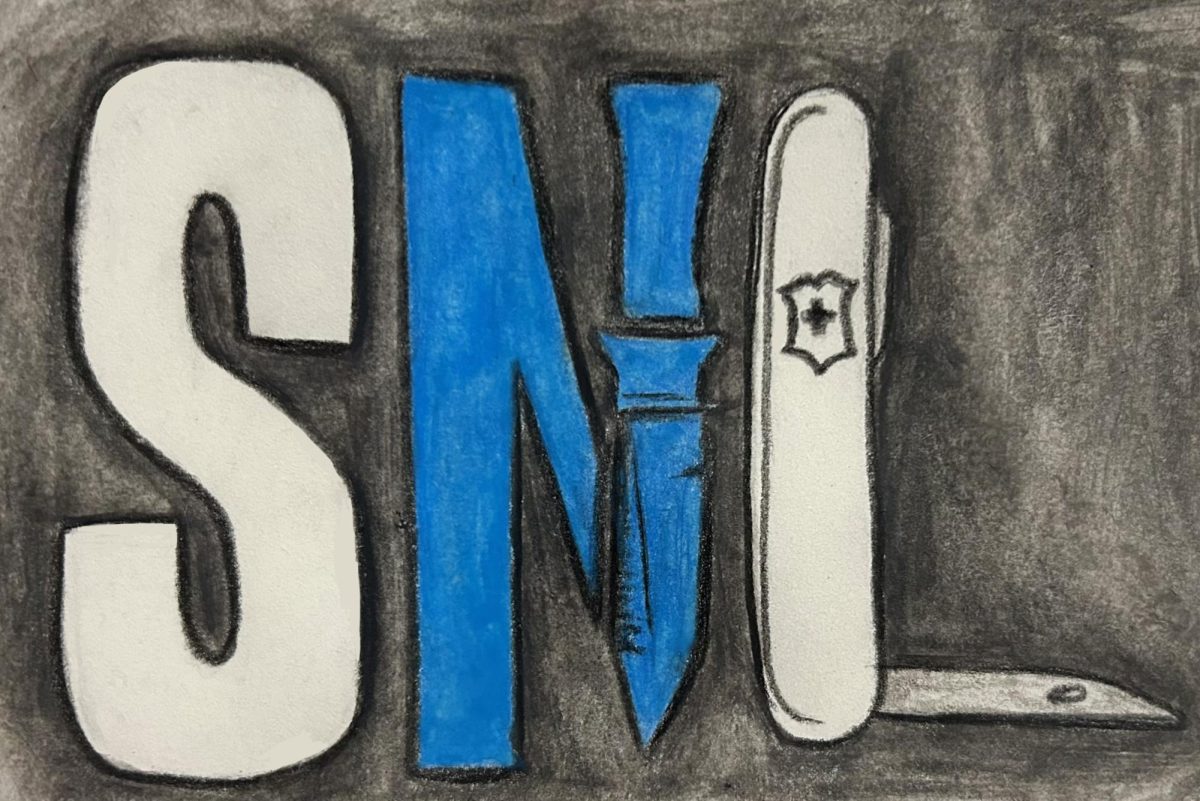
Kam Patterson’s addition to “Saturday Night Live” has sparked a broader conversation about where comedy is headed. His hiring represents more than just a new face on a long-running show; it reflects a shift in what major platforms are willing to support, and what audiences are expecting in 2025.
Patterson’s rise was rapid but traceable. He was discovered on the live podcast “Kill Tony” in the summer of 2023, where he quickly became a fan favorite. The show, known for its harsh, fast-paced roast style and unfiltered audience interaction, brought attention to Patterson’s sharp timing and improvisational confidence. From there, his clips spread widely across social media. His style is direct, reactive, and built for a generation that consumes comedy in short bursts rather than polished, scripted sets.
This trajectory eventually led him to “SNL,” where he was welcomed as a new cast member for Season 51. Created by Lorne Michaels in 1975, “SNL” is a sketch comedy and variety show aired weekly on NBC. Historically, SNL promoted character-based sketches and political parody, but Patterson’s style leans edgier and more chaotic.
RE students have noticed this evolution. Gabriela Barreto ’27 notes, “SNL used to be more subtle, but recently it started becoming super obvious on-the-nose stuff and outright political.” Chloe Steinberg ’27 saw a change in casting along with material. She added that in casting Season 51, “SNL tried to go more for social media stars and edgier humor, like shock comedy, which is what you find when scrolling on social media.”
That shift has precedent. In 2019, Shane Gillis was hired and let go within days after old podcast clips containing slurs and derogatory humor resurfaced. His removal became one of the most prominent examples of cancel culture within the comedy world. It also marked a moment when comedians felt the need to tread extremely carefully, weighing every joke against potential backlash.
Adam Eget, a longtime comedy manager who first hired Patterson as a doorman, and a friend of Gillis, described the pressures comedians faced in recent years. “For a while it was hard for comics to push the envelope for fear of being canceled, shunned, or booed off stage,” he said. Today, he notes, the climate is changing. “Comedians are becoming less scared of being canceled for trying to make people laugh.”
This loosening of pressure is echoed by Brittany Brave, a Miami-based comedian and producer. She described how “over the last 10 years, cancel culture became a thing, and comedians felt like they had to cower and reassess what it meant to write a good joke. But then, it got too out of control, and people started to realize that they were silencing the only people left who can tell the truth.”
The reversal away from cancel culture is part of why SNL has the space to experiment with edgier material. But with that freedom comes responsibility. Even if the fear of immediate cancellation has faded, the line between “edgy” and “offensive” hasn’t disappeared. It has just become blurrier.
A comedian’s job includes walking the thin line between funny and hurtful. Brave explains that to her, “an edgy joke is still a good joke; it’s still funny, and at the core of it, you can’t deny that it’s truthful.”
She describes her own process for deciding what topics to touch on or avoid through the idea of ‘punching up.’ “‘Punching up’ means you try to joke about every topic in the best, most positive, funny, and truthful possible light,” Brave said. ‘Punching up’ uses humor to highlight inequalities; punching down reinforces them by making someone with less power the subject of ridicule.
That distinction is crucial in an era where comedy is getting sharper again. Comedians no longer operate under the intense scrutiny that marked the height of cancel culture, but that doesn’t mean the boundaries are gone. Instead, the challenge has shifted: comedians must figure out how to be bold without being careless, and how to push limits without targeting the people who already face the most pressure.
For SNL, this moment is an inflection point. The show is clearly adjusting to an audience that responds to faster, riskier humor, and Patterson’s hiring symbolizes that change. This evolution stands out because, as a network TV show, SNL still has to follow Federal Communications Commission (FCC) rules. In contrast, online platforms like “Kill Tony” face far fewer restrictions. “It’s going to be interesting to see the gap get bridged between those 2 platforms as they start to double dip with the talent,” said Brave.
Comedy is entering a phase defined by experimentation, sharper edges, and fewer immediate consequences, but also by higher expectations for awareness and intent. Patterson’s arrival isn’t just about the start of his career on “SNL.” It’s about how the show, and comedy as a whole, will navigate a landscape where younger audiences want something bolder, but the line between clever and harmful remains as complicated as ever.