A film was shown, but the story is what happened off-screen.
Long before the opening credits rolled, the award-winning documentary “No Other Land” sparked national controversy. What was meant to be a local screening in Miami Beach transformed into a larger battle over censorship, free speech, and political pressure. Behind the scenes, officials made threats, artists pushed back, and a theater found itself at the storm’s center.
Co-directed by a team of Israeli and Palestinian filmmakers, “No Other Land” is a documentary that follows the life and activism of Basel Adra, a Palestinian journalist and advocate from the village of Masafer Yatta in the occupied West Bank. The film documents the Israeli military’s attempts to evict and demolish Palestinian communities in the area, emphasizing the struggles and resistance of those fighting to stay on the land.
The West Bank, located in the hills surrounding Jerusalem, has been laid claim to by Jordan, the Palestinian Authority, and Israel since the departure of the British in 1949. The land was seized by the Israelis during the 1967 war but was never annexed into the state of Israel. In the 1990s, the Oslo Accords divided the West Bank into three areas—one area under Palestinian control, one under Palestinian administration but with joint Israeli and Palestinian security, and the last under Israeli control. Because the land has never been formally integrated into either territory, much of it continues to be highly controversial.
After premiering in February 2024 at the Berlin International Film Festival, where it won the Berlinale Documentary Film Award, “No Other Land” won an Oscar for Best Documentary Film at the 97th Annual Academy Awards on March 2, 2025. Despite its accolades, the movie has not been picked up by film distributors or streaming platforms in the United States because of the political sensitivity surrounding its subject matter and fears of backlash, forcing the filmmakers to make one-on-one deals with cinemas.
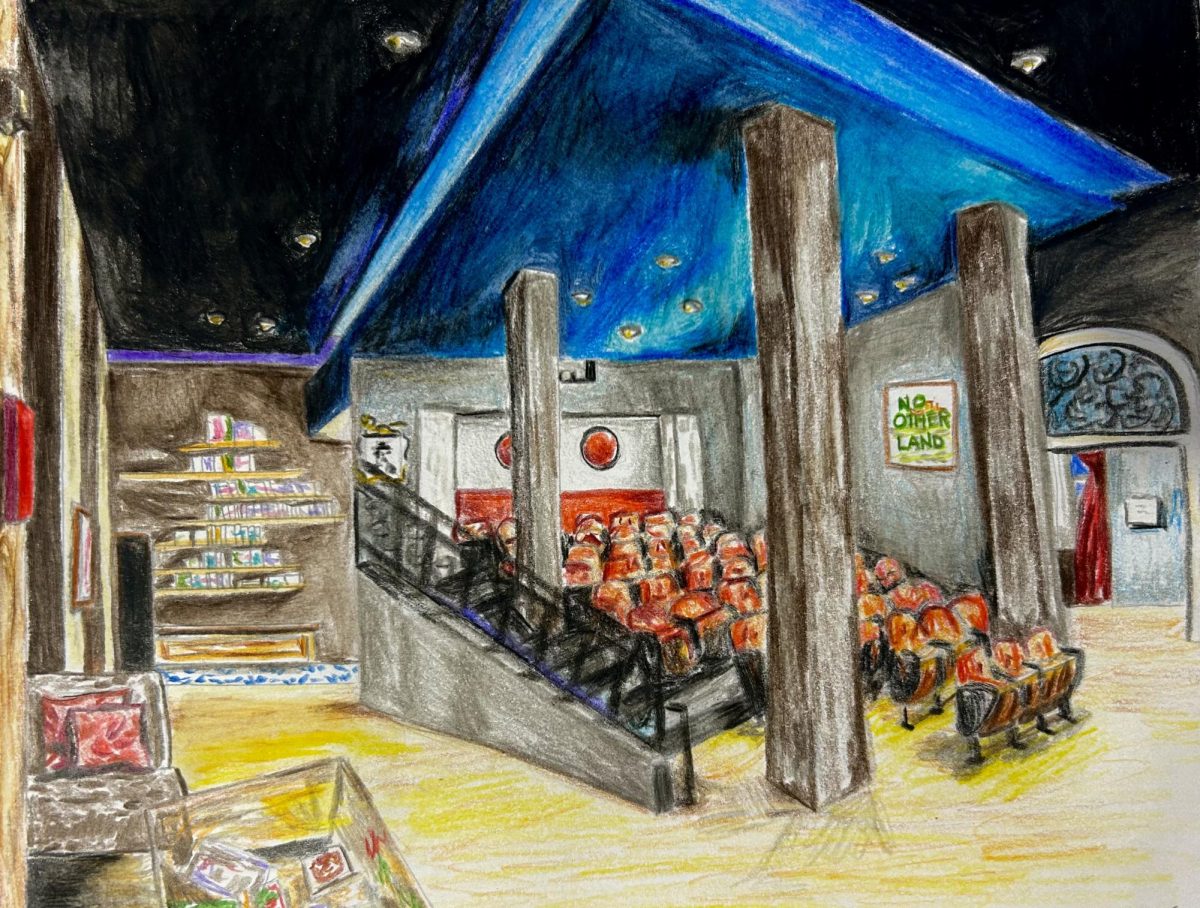
O Cinema, a city-leased arthouse located in Miami Beach, scheduled a weeklong run of “No Other Land” starting March 7. Mayor Steven Meiner of Miami Beach sent a letter to the cinema asking that it cancel the planned screenings, writing that the film is “a one-sided propaganda attack on the Jewish people.” After O Cinema refused, Mayor Meiner moved to revoke the remainder of the city’s nearly $80,000 grant to the theater, which ultimately got taken to City Hall.
Kareem Tabsch, co-founder of O Cinema, explained the theater’s strong stance. “If we capitulated to the mayor’s demand, we would be essentially betraying our mission, going against our core beliefs, and allowing the government to strip away our freedom of expression,” Tabsch said.
In the City Hall meetings, people from the community and respected figures discussed whether the film should be shown. After a lengthy debate, in which a majority of the crowd sided with the theater, the mayor revoked his threats. O Cinema continued to sell out all four screenings of “No Other Land,” in part because of the national coverage surrounding the debacle.
While Mayor Meiner intended to protect his community, he pressured a cultural institution in a way that resembled censorship more than leadership. I believe censorship, especially when driven by politics and government, threatens the core of free expression.
As a Jewish student, I understand the fear and pain that many in our community are feeling right now. With global antisemitism on the rise, Jewish students being attacked and harassed on university campuses, and global leaders refusing to denounce Hamas, it is easy to understand why so many Jewish people are willing to condone the censorship of films like this. “No Other Land” is a pro-Palestinian film. Some feel it presents only one side of a complex and painful conflict. But it is not hate speech. It is a perspective.
Ransom Everglades parent Alex Heckler, a government law attorney and Miami Beach resident, attended and spoke out at the hearing.
“This City Commission item concerned the City’s right to terminate the theater’s lease on City land and City funding for the theater if the City disagreed with a particular movie. It raised the question of whether such action would constitute government censorship,” Heckler explained.
However, he added, “public comments did not address this specific issue.”
The focus should have been on the law, not emotions. But at the hearing, things spiraled. Respected figures were “booed,” and the meeting became a fight over politics and beliefs rather than rights. Heckler observed that many of the public comments “had nothing to do with the agenda item” and included “anti-Israel and antisemitic rhetoric,” illustrating how quickly situations can escalate when respectful dialogue ends.
“This is the most disgusting and disappointing behavior I have ever seen at a public meeting,” Heckler said. “Regardless of which side of an issue an individual is on, decorum is always necessary.”
Mrs. Miriann Meyeringh, a history teacher at RE, put it plainly: “Free speech is kind of an ugly, two-headed sword. It’s the speech that disgusts us and that we don’t agree with that’s almost the only speech worth protecting.”
She also made a key point: no one is forcing you to watch a film. “One of the best ways to show we don’t like something is to not pay money to see it.”
That’s the power of choice. Not everything you oppose needs to be erased.
Art is an impactful form of expression that enables creators to communicate through emotion and imagery. It invites us to see the world through someone else’s eyes and offers perspectives beyond our own. When we begin to restrict what art can or cannot be shown, we are not only silencing the artist but also closing ourselves off to the diversity of thought that art brings. Even if we disagree with the message, whether conveyed through film, painting, or another medium, we have a responsibility to ensure that our personal beliefs do not drown out or discredit the voices of others.
Oscar-winning documentarian Roger Ross Williams took a strong stance on this question. “When you start to censor filmmakers and films, that becomes a problem. There’s no limit to that,” he explained.
As a filmmaker, he emphasized the artist’s responsibilities. “We are soul makers. We have to speak truth—and speak truth to power.”
For RE photography teacher Mr. Stock, the whole point of art is to challenge us. “You don’t need to agree with or like what’s being shown. That’s important in order to have discourse.”
Controversial art should not be viewed as a threat, but as an outlet for dialogue. When we approach it with openness, willing to share our own perspectives while considering those of others, art becomes a catalyst for meaningful discussion. These conversations can lead to deeper understanding, not only of the artist’s intentions but also of our own beliefs and values.
Residents of Miami Beach and people nationwide rallied behind O Cinema.
“The most positive thing was the community spoke out overwhelmingly and said we will not allow censorship,” Tabsch said. “Art should be controversial. What is controversial to some is enlightening to others.”
That’s why this matters. Not because everyone agrees, but because they don’t. Because freedom of expression is not about comfort. It’s about courage. And at this moment, courage means letting people speak, even when it’s hard to hear.
I can’t help but feel uneasy about how easily one person in power can shape what we’re allowed to see. We say we value free speech, but that freedom disappears the moment someone disagrees. Like any film, “No Other Land” presents a version of the truth, but trying to silence it only makes it louder. The attempt to censor it didn’t protect anyone. It exposed how fragile our commitment to expression really is.
What happened at O Cinema wasn’t just about a movie. It was a test of our values. If we only defend free speech when it’s comfortable, then we don’t really believe in it at all.